Expected Colorado River pact seen as step in right direction
Multi-year plans for how states will reduce Colorado River water intake could be nearing an agreement, with a federal plan expected to be released in the coming week.
Years of failed multi-state negotiations dragged the federal government into the complicated contract to decide how states would prevent a total collapse of the critical Western water source that is the Colorado River. A soon-expected Bureau of Reclamation impact statement would represent meaningful progress, but not a complete solution for the dwindling river.
“We’ve known for 19 years that the current guidelines are going to expire, and we’ve known about climate change and the impacts it’s having,” said John Berggren, a regional policy manager for Western Resource Advocates, an environmental organization. His work includes the Colorado River.
“We’ve known about ongoing droughts. We’ve known about overuse,” Berggren told The Center Square. “We’ve known about all these challenges – and now we’re actually trying to take steps to solve them.”
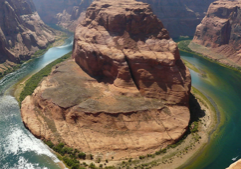
The Colorado River provides water for agricultural irrigation, hydropower, recreation and municipal supplies for the Lower Basin states of California, Nevada and Arizona and the Upper Basin states of Colorado, Utah, New Mexico and Wyoming.
The Southern Nevada Water Authority told The Center Square that it was hopeful of a final Colorado River water usage plan, an Environmental Impact Statement, by the U.S. Bureau of Reclamation in the coming days.
“It’s likely a two-year operating plan within a 10-year framework that will be released,” SNWA spokesperson Bronson Mack told The Center Square. “[That would] allow the states to continue to negotiate.”
The 10-year framework would give the Bureau of Reclamation a general longer-term plan for the river’s management, while the two-year operation plans would afford states some additional time to reach the multi-state agreement, according to Mack.
“We haven’t seen anything final from the feds, but we expect it to be any day now,” he added.
For the roughly 40 million people who rely on the Colorado River as a primary water source, the 2026 end-of-year deadline for a new water usage agreement among river users is not a distant fear.
“It’s not the silver bullet,” Berggren said of the potential Bureau of Reclamation plan. “It’s not the holistic, robust set of guidelines that puts the Colorado River Basin on a sustainable path or anything like that. But it’s taking a good step in the right direction – so it is a big deal in that sense.”
The Colorado River Board of California did not respond to an immediate request for comment by The Center Square on the issue. The Arizona Department of Water Resources declined to comment until the Bureau of Reclamation plan was released.
“I’m glad reclamation is doing something,” said Berggren. “I’ll be curious to see what the first two years of operations are, but the general framework for that 10-year record of decision, and the range of actions they could take are generally pretty good.”
The hope among the seven negotiating states and advocates like Berggren remains that state negotiators come to an agreement without the Bureau of Reclamation being forced to impose a decision.
“Ultimately the objective is for the seven states to reach a consensus-based agreement,” said Mack.
The Colorado River Basin states blew through two negotiation deadlines in November 2025 and this February, with no sign of serious progress, according to analysts at the time.
After the repeated Colorado River negotiation misses, states began to look at taking legal action. According to an AZ Capitol Times report, at least four states have begun to build a legal team for a potential Supreme Court battle over river water rights.
“We all lose if someone sues, and this thing gets tied up in the courts,” said Berggren. “I think that’s the real loss for water users throughout the basin, if this ends up in the Supreme Court for a decade.”
Berggren said the Bureau of Reclamation has indicated it would also prefer a state negotiator-reached agreement for water usage on the Colorado River.
“They’ve been clear that they’re not moving forward because they want to,” said Berggren. “They’re going forward because they have to, but they’re very open to the seven states reaching an agreement.”





Slight Chance Rain Showers then Mostly Cloudy
Latest News Stories
U.S. Supreme Court could rule on Texas lawsuits brought in Democratic-led state courts

WATCH: Illinois In Focus Daily | Monday Aug. 11th, 2025

Illinois quick hits: Judge denies Madigan’s motion; legislator urges action on DCFS interns

About Us

Everyday Economics: CPI takes center stage as tariff-driven price pressures mount

Net negative migration is harmful to the economy, economists say

Details pending on billions in foreign investments coming from trade deals
Will County Health Department Seeks $1 Million to Avert ‘Drastic’ Service Cuts from Expiring Grants
Will County’s “First-in-Nation” Veterans Center to House Workforce Services, Sparking Debate
Improved Vendor Service Creates $1.2 Million Shortfall in Sheriff’s Medical Budget
Will County Public Works Committee Unveils 25-Year Transportation Plan, Projects $258 Million Gap
Will County Animal Protection Services Seeks New Facility Amid “Gaping Wound” of Space Crisis
Board Confronts Animal Services Crowding, Explores Future Facility Options
Will County Board Members Demand Transparency in Cannabis Tax Fund Allocation