U.S. House passes govt funding stopgap to avoid shutdown
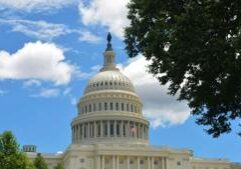
The U.S. House passed a short-term continuing resolution to keep government funding on cruise control past the looming Oct.1 shutdown date, sending the bill over to the Senate.
The CR would ensure federal agencies are funded until Dec. 4, buying lawmakers more time to finish passing all 12 annual appropriations bills. Currently, not a single appropriations bill has passed both chambers of Congress.
“The hard reality before us is straightforward – the fiscal year deadline is outpacing the work that remains,” House Appropriations Chairman Tom Cole, R-Okla., told lawmakers before the vote.
“Our conference refuses to let the obstruction and inaction of Senate Democrats trigger another manufactured shutdown at the end of September. That is why we are acting before a funding lapse crisis, not in response to it.”
If lawmakers do not appropriate new funds or temporarily freeze funding at current levels, the government shuts down, as has already happened twice in the 119th Congress. Yet many Democrats are indicating they are willing to take that risk, with all but six opposing the CR in the late Tuesday night House vote.
“The House Republican continuing resolution gives the Trump administration even more power over the federal budget and fails to block funding for Donald Trump’s violent mass deportation regime,” House Democratic leadership released in a joint statement explaining their opposition.
“This continuing resolution is a premature and desperate attempt by Republicans to abdicate their responsibility to govern while there are still several months left to negotiate a bipartisan agreement.”
Though the CR now heads to the Senate for approval, Senate Majority Leader John Thune, R-S.D., indicated that chamber leadership has its own plans.
Thune told reporters that Senate appropriations from both parties are “working…to find a path forward” on a CR to keep the government funded past the November midterm elections.
“I think it’s going to be really important that we figure out a path forward to get a bipartisan agreement to fund the government, that will keep the government open and ensure that government employees are getting paid,” Thune said Tuesday night.
“That is something that I intend to bring to the floor for a vote before the August break,” he added. “And that depends a little bit on cooperation right now. It’s possible that that would be something that would get punted into September.”
Thune’s bipartisan approach may be crucial to averting a third costly shutdown, since congressional Democrats have already proven they are willing to block government funding over immigration policy.
Senate Democrats triggered the longest government shutdown in history in February, a 76-day shutdown of the Department of Homeland Security, over demands that Republicans implement drastic reforms to ICE and Border Patrol.
Democrats only voted to end the shutdown when Republicans stripped immigration enforcement funding from the Homeland Security appropriations bill entirely, though Republicans later infused ICE and Border Patrol with a three-year cash advance via a budget reconciliation bill.





Chance Showers And Thunderstorms
Latest News Stories
Will County Poised to Launch Major Mental Health Initiative Based on Joliet Program’s Success
Looming State Energy Bill Threatens to Further Limit County Control Over Solar and Wind Projects
Controversial Immigrant Rights Resolution Postponed by Will County Board After Heated Debate
Will County’s Gas-to-Energy Plant Reports Nearly $460,000 Net Loss Amid Operational Setbacks
Will County to Draft First-Ever Policy on Artificial Intelligence Use
Will County Sees 50% Drop in Opioid Deaths, But Alarming Rise in Suicides
Will County Board Backs Effort to Rename ‘Stigmatizing’ Chicago Sanitary and Ship Canal
Access Will County Dial-a-Ride on Track for Full County-Wide Service in 2026
Divided Will County Board Authorizes Condemnation for 143rd Street Widening
Will County Committee Approves Preliminary $161.6M Tax Levy on Split Vote Amid Heated Debate Over Spending
Will County Eyes Major Overhaul to Consolidate Scattered Government Offices
Sheriff’s Office Reports Crime Down 10%, Cites Body Cam Footage as Main Challenge of Safety Act