Lincoln-Way Board Reviews $162 Million Tentative Budget, Projects Deficit Due to Bus Purchase Timing
Article Summary: The Lincoln-Way Community High School District 210 Board of Education reviewed a tentative $162.5 million budget for Fiscal Year 2026, which includes a 5.48% increase in operating expenses and a planned, one-time operating deficit of $1.6 million caused by the timing of a final payment for new buses. Despite the on-paper deficit, officials project an underlying operating surplus and a healthy end-of-year fund balance of nearly 34%.
Lincoln-Way School District 210 Key Points:
-
Total Expenditures: The tentative FY2026 all-funds budget projects total expenditures of $162.5 million.
-
Operating Expenses: Operating expenditures are set to increase by 5.48% to $125.4 million, driven primarily by a 4.4% rise in salaries and benefits and a 9.7% increase in tuition and fees.
-
Planned Deficit: The budget includes a one-time, planned operating deficit of $1,647,266, which is attributed to the final $2.8 million payment for a fleet of new buses whose purchase was funded in the previous fiscal year.
-
Fund Balance: The district projects its operating fund balance will end the year at $42.1 million, or 33.6% of expenditures, in compliance with board policy.
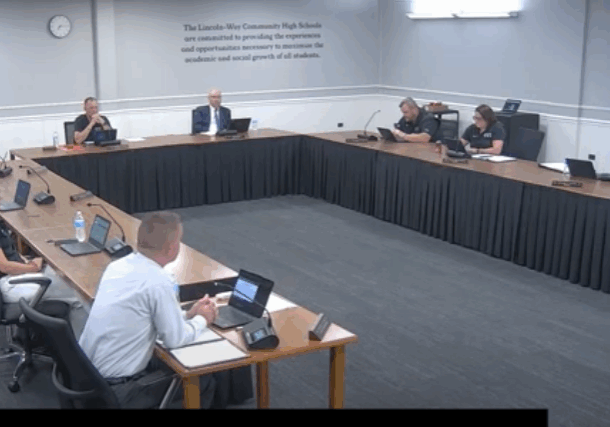
NEW LENOX – The Lincoln-Way Community High School District 210 Board of Education on Monday reviewed a tentative fiscal year 2026 budget that anticipates a 5.48% increase in operating spending and reflects a planned, temporary operating deficit due to the final payment for a new bus fleet.
Michael Duback, Assistant Superintendent & Treasurer, presented the $162.5 million all-funds budget, detailing the financial plan for the 2025-2026 school year. Operating revenues are projected to increase by 2.94% to $126.9 million, while operating expenditures are budgeted to rise to $125.4 million.
The main drivers of the spending increase are salaries and benefits, which are budgeted at a combined $87.4 million, a 4.4% increase over the prior year. Duback credited the district’s business and HR teams for their accuracy, noting that last year’s spending on salaries and benefits was within 0.3% of the initial budget.
Another significant increase is in tuition, dues, and fees, which are projected to jump 9.7% to $6.1 million. This includes an estimated $300,000 increase for private facility tuition for students with needs the district cannot meet in-house. It also accounts for an anticipated 7.5% to 11% cost increase from the Lincoln-Way Special Education District 843 cooperative.
“That’s going to be hard for us to plan for if that high of a trend continues,” Duback said of the District 843 increase.
On the revenue side, local sources, which account for 70% of the district’s funding, are expected to grow by 3.66%. State revenues will increase more modestly, as the district transitions from a “Tier 1” to a “Tier 2” funding status, resulting in a smaller increase in Evidence-Based Funding. Federal revenues are projected to decrease by 8%, partly due to the expiration of pandemic-era relief funds and lower grant allocations for special education and professional development.
Duback highlighted a key element of the budget: a planned, one-time operating deficit of $1,647,266. He explained this was an intentional accounting result of receiving all bond proceeds for new buses last fiscal year, while making the final $2.8 million payment for them in the current fiscal year.
“That was planned for. It is not a compounding issue,” Duback assured the board. He noted that when this single payment is excluded, the district shows an underlying operating surplus of approximately $2.2 million.
The budget also earmarks $3 million for capital improvement projects, separate from the major life safety HVAC work scheduled for the summers of 2026 and 2027. Board President Aaron P. Janik suggested seeking bids for other maintenance needs as alternates to the large HVAC project, which could potentially save the district money.
The board will continue to monitor several factors before the budget is finalized, including federal grant allocations, final staffing numbers, and the possibility of another bus purchasing round.
The tentative budget is now on public display for 30 days. A public hearing and final vote on the budget are scheduled for the board’s September 18 meeting.
Chance Showers And Thunderstorms
Latest News Stories
Behavioral Health Division Drops Wait Times, Reports Zero Opioid Deaths in February

Meeting Summary and Briefs: Village of Manhattan for March 3, 2026
Harris Drive Residents Plead for County Intervention Amid Failing Septic Systems and Flooding
Manhattan Village Board Approves Public Works Hires and Wastewater Equipment Purchase

Will County Sheriff’s Office Investigates Fatal Hit-and-Run in Homer Glen
Federal Funding Freezes Threaten Will County Public Health Programs Amid Ongoing Lawsuits
Manhattan Village Board Hears Pushback Against Massive Solar Farm and Industrial Expansion
Board Splits Along Party Lines to Approve 2026 Federal Legislative Agenda
Meeting Summary and Briefs: Will County Landfill Committee for February 10, 2026
Meeting Summary and Briefs: Will County Board for February 19, 2026
Board Approves Joliet Township Clean Fill Facility Despite Environmental Objections

Will County Board Unanimously Rejects Controversial Solar Farm in Troy Township