Looming State Energy Bill Threatens to Further Limit County Control Over Solar and Wind Projects
Article Summary: A state energy bill likely to be considered during the fall veto session or next spring could further strip Will County of its authority to regulate large-scale solar and wind projects, according to a report from the county’s state lobbyist. The proposed legislation aims to clarify and expand state-level control over issues like setbacks, landscaping, and decommissioning, prompting frustration from local officials who feel their zoning authority is being eroded.
State Energy Legislation Key Points:
-
Pending state legislation (HB 4116/4120) would further define and limit the regulations counties can impose on renewable energy projects.
-
Proposed changes would prevent counties from requiring landscaping berms and set a statewide standard for setbacks at 150 feet from a residence.
-
The bill also includes a provision that could force the county to pay the legal fees of a developer if a project denial is overturned in court.
-
The legislation is a continuation of the state’s effort to prevent local governments from inhibiting the development of renewable energy.
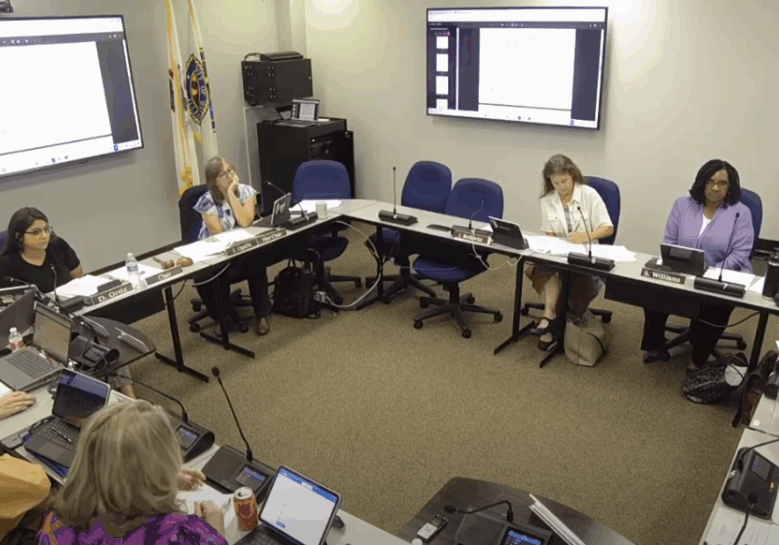
JOLIET, IL – Will County and other local governments may soon have even less control over the placement of large-scale solar and wind farms under a new energy bill being negotiated in Springfield, the county’s Legislative Committee learned on Tuesday, October 7, 2025.
Matt from Mac Strategies Group, the county’s state lobbying firm, provided an update on House Bills 4116 and 4120, which are being considered for the upcoming veto session. He explained that the legislation is an effort to clarify and expand upon a previous state law that preempted much of the local zoning authority over renewable energy projects.
“It appears to be an effort at clarifying even further what you can and can’t do,” he told the committee.
Board members expressed immediate concern over several provisions that would directly impact local zoning standards. The bill explicitly states that counties cannot require berms or other large obstructions for screening and sets a maximum screening height of five feet. It also establishes a 150-foot setback from residences, a distance board member Judy Ogalla called insufficient.
“The World Health Organization says you should have a setback of a thousand feet,” Ogalla said. “That’s a completely huge area of difference there.”
The legislation also mandates an 18-month timeline for decommissioning a closed facility and includes language that would require the county to pay a developer’s legal fees if the county denies a project and loses a subsequent court challenge.
Board member Daniel J. Butler questioned the state’s rationale for overriding local control. “Who better than the people that live there to be able to inhibit how that property is being used?” he asked.
The lobbyist explained the state’s position: “The reason the state legislature passed law taking away authority from county boards is because they felt county boards in areas of the state were inhibiting the use of solar and wind,” he said. “They very much believe in solar and wind and do not want to see them inhibited in Illinois.”
While the bill’s passage during the fall veto session is considered less than 50%, it is highly likely to be taken up in the spring.





Patchy Fog then Partly Sunny
Latest News Stories

Nevada gubernatorial candidates clash over Trump’s policies

Feds cut funding for Hawaii Medicaid fraud unit

Two Democrats, two Republicans seek attorney general seat

Democrats condemn Minnesota GOP convention tribute to Derek Chauvin

Questions loom after data center legislation stalls
Feds charge 14 in Ohio fraud schemes, totaling $50M

U.S. Supreme Court rules in favor of generic drug patents

Former HHS secretary tied to company that could benefit from CMS screening proposal
Supreme Court rules against Verizon, AT&T over privacy penalties

Illinois quick hits: Stop child care scams act clears U.S. House, Illinois U.S. Reps introduce immigrant due process bill
Trump to tap Blanche as attorney general

Trump signs executive orders on customs, federal workforce reforms