OpenAI launches teachers AI tools for classrooms
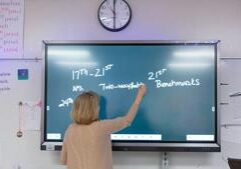
OpenAI has introduced a new free version of ChatGPT for teachers, as artificial intelligence continues to grow within education.
The new platform offers educators a free account through June 2027 to adapt classroom materials, streamline lesson planning, collaborate with colleagues and test AI tools at their own pace, the company said in its announcement.
Unlike a regular ChatGPT account, the education version operates under enterprise-grade privacy, security and compliance standards designed to protect student information and meet federal FERPA requirements, the announcement added.
OpenAI is already working with an initial cohort of leading school districts that collectively serve nearly 150,000 teachers and staff.
“When it comes to AI in schools, the question is whether it is being used to disrupt education for the benefit of students and teachers or at their expense,” said Chris Lehane, OpenAI’s chief global affairs officer. “We want this technology to be used by teachers for their benefit, helping them learn, think and create.”
Leah Belsky, OpenAI’s vice president of education, wrote on LinkedIn that AI in the classroom is unavoidable and that teachers need a safe space to explore it.
“[E]ducators need space to explore AI for themselves. ChatGPT for Teachers is built to provide educators and school district leaders exactly that – giving teachers tools that help free up time for the most human parts of teaching,” Belsky wrote.
Over the summer, the company, along with other organizations, partnered with the American Federation of Teachers. Through a $23 million education initiative, the National Academy for AI Instruction, all AFT members, starting with K-12 educators, will receive free access to AI training and curriculum resources.
“AI holds tremendous promise but huge challenges — and it’s our job as educators to make sure AI serves our students and society, not the other way around,” said AFT President Randi Weingarten. “The direct connection between a teacher and their kids can never be replaced by new technologies, but if we learn how to harness it, set commonsense guardrails and put teachers in the driver’s seat, teaching and learning can be enhanced.”
Educators and competing companies say ChatGPT for Teachers remains a general AI with educator-friendly features, rather than a tool built specifically for school needs.
Adeel Khan, founder and CEO of MagicSchool, an AI-assisted platform for educators, pointed out that OpenAI’s improvements do not go far enough.
AI is already a part of students’ lives through social media like Snapchat and TikTok; schools must help students develop “agency and literacy” around the technology, Khan said.
“It’s good that OpenAI is adding protections, but it’s missing the level of protection that’s truly necessary for educators: true enterprise-grade education security, custom district-by-district data-privacy agreements, and real visibility into usage for districts,” he said in an email to The Center Square.
As AI tools become impossible to keep out of schools, the conversation continues to shift from whether AI belongs in education to who gets to shape how it is used.
“It’s not an ‘if’ AI will be in schools,” Khan added. “It’s how.”






Chance Showers And Thunderstorms then Showers And Thunderstorms
Latest News Stories

DOJ to release more than 3 million Epstein documents Friday

WATCH: Commission meets as Chicago mayor seeks to prosecute ICE; SNAP changes Sunday

Illinois Quick Hits: Unemployment up over last year

Trump taps Kevin Warsh as next Fed chair

Meeting Summary and Briefs: Will County Landfill Committee for Jan. 13, 2026

Monee Police warn residents of phone scammers impersonating officers

National shutdown, strike planned for Friday, Jan. 30 in protest of ICE

Gori firm accused of fraud, racketeering, ‘bounties’ in asbestos litigation

WATCH: Democratic legislators introduce anti-ICE legislation

Illinois Quick Hits: Grayson gets 20 years for murder
Bill Cassidy, facing Trump-backed challenger, bets on ‘who delivers’

Trump Cabinet meeting: New Fed chair, coal saving lives, Russia and Ukraine

Paul introduces legislation to halt welfare funding for non-citizens