Survey: Teachers concerned about AI’s impact on students
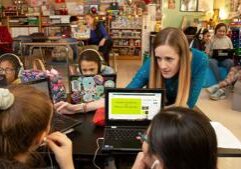
K-12 educators say students are turning to artificial intelligence for emotional support, and many are concerned that current safeguards are insufficient, according to a new study.
The questionnaire, conducted by Arkansas State University, surveyed 760 K-12 educators to understand their views on the rise of AI and ChatGPT in classrooms.
Initial findings show 41% of educators view AI in education negatively, 30% view it positively, and 29% are neutral. Half of educators said existing AI safeguards intended to protect students are insufficient.
Nearly half said current protections are “insufficient to protect students” and that “AI malfunctions or misleading outputs have harmed learning outcomes, including comprehension, grades and assignment quality.”
Seventy-nine percent of educators also recognized students have become dependent on AI and have lower confidence in their own problem-solving abilities.
Twenty-four percent of educators said students now confide in an AI tool rather than a teacher, counselor or peer.
This has been an ongoing debate since the Trump administration took steps to bring AI to education, and OpenAI has since introduced a free version of ChatGPT for teachers.
The platform offers educators a free account through June 2027 to adapt classroom materials, collaborate with colleagues and test AI tools, the company said.
Still, 39% of K-12 educators “do not feel prepared to guide students in using AI tools responsibly,” according to the ASU study.
Some teacher organizations would disagree. Over the summer, the American Federation of Teachers partnered with OpenAI to create the National Academy for AI Instruction.
All AFT K-12 educators will receive free access to AI training and curriculum resources.
“AI holds tremendous promise but huge challenges — and it’s our job as educators to make sure AI serves our students and society, not the other way around,” said AFT President Randi Weingarten. “The direct connection between a teacher and their kids can never be replaced by new technologies, but if we learn how to harness it, set commonsense guardrails and put teachers in the driver’s seat, teaching and learning can be enhanced.”
OpenAI is already working with an initial cohort of school districts across the country representing 150,000 teachers and staff.
“When it comes to AI in schools, the question is whether it is being used to disrupt education for the benefit of students and teachers or at their expense,” said Chris Lehane, OpenAI’s chief global affairs officer. “We want this technology to be used by teachers for their benefit, helping them learn, think and create.”






Areas Of Drizzle
Latest News Stories

Malliotakis: Commie Caucus is coming to Congress

Texas Republicans chastise Mexican official’s ‘audacious’ border security claims

Feds freeze $1B to California, Minnesota Medicaid

Arrangements, services in place for Graham

Push increased for Dalilah’s Law to get a floor vote

Texas suffers its first casualty in Iran war: female soldier from Carrollton
Illinois quick hits: Benton’s replacement chosen; gas prices resume climb

Illinois diversity certifications lag despite partial computer fix

FBI: Suspect in federal building attack was anti-ICE ‘extremist’

U.S. House to vote on government funding stopgap

Trump vows retaliation for U.S. service members’ deaths

Forecasters split on midterms, but a sweep is possible, maybe likely