Survey: Teachers concerned about AI’s impact on students
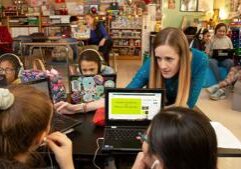
K-12 educators say students are turning to artificial intelligence for emotional support, and many are concerned that current safeguards are insufficient, according to a new study.
The questionnaire, conducted by Arkansas State University, surveyed 760 K-12 educators to understand their views on the rise of AI and ChatGPT in classrooms.
Initial findings show 41% of educators view AI in education negatively, 30% view it positively, and 29% are neutral. Half of educators said existing AI safeguards intended to protect students are insufficient.
Nearly half said current protections are “insufficient to protect students” and that “AI malfunctions or misleading outputs have harmed learning outcomes, including comprehension, grades and assignment quality.”
Seventy-nine percent of educators also recognized students have become dependent on AI and have lower confidence in their own problem-solving abilities.
Twenty-four percent of educators said students now confide in an AI tool rather than a teacher, counselor or peer.
This has been an ongoing debate since the Trump administration took steps to bring AI to education, and OpenAI has since introduced a free version of ChatGPT for teachers.
The platform offers educators a free account through June 2027 to adapt classroom materials, collaborate with colleagues and test AI tools, the company said.
Still, 39% of K-12 educators “do not feel prepared to guide students in using AI tools responsibly,” according to the ASU study.
Some teacher organizations would disagree. Over the summer, the American Federation of Teachers partnered with OpenAI to create the National Academy for AI Instruction.
All AFT K-12 educators will receive free access to AI training and curriculum resources.
“AI holds tremendous promise but huge challenges — and it’s our job as educators to make sure AI serves our students and society, not the other way around,” said AFT President Randi Weingarten. “The direct connection between a teacher and their kids can never be replaced by new technologies, but if we learn how to harness it, set commonsense guardrails and put teachers in the driver’s seat, teaching and learning can be enhanced.”
OpenAI is already working with an initial cohort of school districts across the country representing 150,000 teachers and staff.
“When it comes to AI in schools, the question is whether it is being used to disrupt education for the benefit of students and teachers or at their expense,” said Chris Lehane, OpenAI’s chief global affairs officer. “We want this technology to be used by teachers for their benefit, helping them learn, think and create.”






Mostly Cloudy
Latest News Stories

Illinois may bring early warning of toll costs ahead of proposed rate hike

Illinois senator says True Value move highlights business climate concerns

Two service members killed, one missing in Iranian strike

U.S. Coast Guard monitors Chinese ships off Alaska coast

Millions celebrate America 250, Sail250 events in key ports

Chicago delays vote on parking meter sale, risks litigation

Hegseth’s ‘High-T’ troop screening mandate comes without cost estimate

Congressional candidates tackle housing, immigration

Senators to examine hospital price transparency legislation

Transit bill sponsor ok with recycled board appointments

U.S. adds 3.5M businesses despite shaky economy

Walmart targeted with lawsuit over customer service line voice recordings