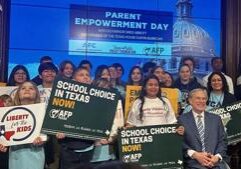
More states now offer school choice programs for families
School choice debates continue as more states opt into programs aimed at expanding educational options for families.
National School Choice Week, scheduled for Jan. 25-31, is designed to raise awareness about school choice around the country through events with schools and organizations.
Supporters argue that the programs give families greater control over how and where their children learn. Those who oppose warn of oversight gaps and the impacts on public school funding.
At the federal level, President Donald Trump’s One Big Beautiful Bill Act creates a federal income tax credit of up to $1,700 per year for individuals who donate to certified scholarship organizations.
States that have opted into education freedom initiatives include Alabama, Arkansas, Georgia, Iowa, Louisiana, Mississippi, Tennessee, Texas and Virginia. Many others continue to opt in.
Nonprofits involved with the school choice programs use donations to fund private school tuition scholarships for students from qualifying low-income households.
Kim Mazzuca, president and CEO of education-equity nonprofit 10,000 Degrees, said these recent federal policy shifts have added uncertainty to the education landscape.
“In the past year, we have witnessed first-hand how policy and funding rollbacks from this administration are negatively impacting our students, schools, community, and the overall state of education …,” Mazzuca told The Center Square in an email. “The state of education under this administration is uncertain, yet our community at large remains resilient.”
Idaho recently joined the school choice movement with the launch of the Idaho Parental Choice Tax Credit.
The program allows eligible parents to claim a tax credit for education-related expenses, including school tuition, books, tutoring, among other things.
The credit is up to $5,000 per student, or up to $7,500 for students with qualifying disabilities.
According to yes. every kid. foundation, 82% of Idaho parents support education freedom, 77% have expressed interest in participating in the tax credit program, 69% support giving families more choices in schools and educational resources, and 64% approve the new tax credit.
“The Idaho Parental Choice Tax Credit demonstrates the state’s unwavering belief in empowering families as the primary decision-makers in their children’s education by putting resources directly into the hands of families. Idaho is strengthening communities, broadening opportunity, and securing a brighter future for every child in the Gem State,” said Heidie Nesset, vice president of implementation at yes. every kid. foundation.
The push for expanded school choice comes amid broader concerns about education outcomes nationwide. In California, analysis cited by education researchers found that the longer students remained in the public school system, the lower their proficiency rates in math.
Lance Izumi, senior director of education at the Pasadena-based Pacific Research Institute, said the findings highlight the need for alternatives.
“Given the failure of California’s public schools to deliver results for all the tax dollars poured into it, parents should be given an exit ticket out of the system for their children,” Izumi said.
Arizona Gov. Katie Hobbs has opposed the state’s Empowerment Scholarship Account program, saying that the school choice initiative operates with insufficient oversight and wastes taxpayer dollars.
Julie Young, Kay Johnson and Julie Petersen, co-editors of the book “Virtual Schools, Actual Learning: Digital Education in America,” argue that flexibility in education is the key.
They told The Center Square in an email that virtual, hybrid and micro-school models can expand access, particularly for rural students, accelerated learners and working adults, while shifting the focus from competition between schools to collaboration centered on student needs.
“For parents, school choice starts with a simple question: What works best for my child?” the editors said. “School choice recognizes that learners start in different places and thrive under different conditions.”






Chance Showers And Thunderstorms then Showers And Thunderstorms
Latest News Stories
Will County Transportation Department Announces Open House for Manhattan-Monee Road Expansion
Will County Community Mental Health Board Faces $5 Million Shortfall in 2026 Grant Requests
Meeting Summary and Briefs: Public Health & Safety Committee for March 5, 2026

Will County Officials Warn of Zoom Court Scam Targeting Defendants for Fraudulent Dismissal Fees

Will Land Use Committee Evaluates Multi-Million Dollar Buyout for Flooded Harris Drive Homes
Behavioral Health Division Drops Wait Times, Reports Zero Opioid Deaths in February

Meeting Summary and Briefs: Village of Manhattan for March 3, 2026
Harris Drive Residents Plead for County Intervention Amid Failing Septic Systems and Flooding
Manhattan Village Board Approves Public Works Hires and Wastewater Equipment Purchase

Will County Sheriff’s Office Investigates Fatal Hit-and-Run in Homer Glen
Federal Funding Freezes Threaten Will County Public Health Programs Amid Ongoing Lawsuits
Manhattan Village Board Hears Pushback Against Massive Solar Farm and Industrial Expansion