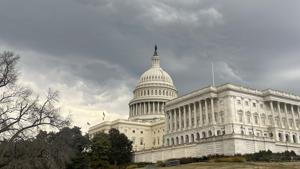
U.S. Supreme Court rules against automatic prison release punishments
The U.S. Supreme Court, in an 8-1 decision, decided an individual on supervised release is not automatically extended when that person absconds from their release.
The case, Rico v. US, focuses on Isabel Rico who absconded her supervised release while she was on probation after being detained in federal prison. During her probation period, Rico was convicted of a state drug offense.
A judge charged her with time in prison and several months of supervised release.
Justices on the court said Rico cannot be automatically considered for an extension of supervised release just because she violated her previous release.
“The government seeks not a rule that stops the clock or ensures a defendant takes no advantage of abscondment, but one that imposes new punishment by automatically extending supervised release,” Justice Neil Gorsuch wrote in the court’s majority opinion.
The justices argued that the Sentencing Reform Act protects Rico from automatic additional punishment, even though she absconded her supervised release.
In 1984, Congress passed the Sentencing Reform Act, which created mandatory uniform national guidelines to increase transparency and unity in federal sentencing practices.
“The Act already provides many ways to ensure defendants do not profit from violations without automatically extending the period beyond what a judge ordered,” Gorsuch wrote.
Justice Samuel Alito provided the lone dissenting opinion. He argued the Sentencing Reform Act was used by the judge to determine Rico’s punishment after she absconded supervised release.
“It seems strange to regard a crime committed after the expiration of “unsupervised supervised release” as a non-event,” Alito wrote. “By that logic, if petitioner had gone on a murder spree after the expiration of the period of unsupervised supervised release, the sentencing judge would have been required to put that out of his mind.”






Chance Showers And Thunderstorms
Latest News Stories

WATCH: Chicago braces for federal law enforcement; Dabrowski on public safety, education

Illinois quick hits: Eight dead after weekend violence; Mexican national’s extradition sought

JJC Moves Forward with Major Technology Overhaul to Modernize College Operations

Chinese networks use U.S. to launder billions for Mexican cartels

Alternative tax-hike ideas emerge to fund Illinois public transit

Kamala Harris pro-union X post inspires major Labor Day backlash

Speaker Mike Johnson says Shreveport ‘Democratic DA’ is to blame for high crime

Trump says he will sign executive order ending mail-in voting

Meeting Summary and Briefs: Joliet Junior College Board of Trustees for August 20, 2025
Everyday Economics: Jobs report takes center stage in week ahead
Legislator warns bad Illinois policy continues to hurt business investment

As summer ends, budget battles and investigations await