AI safety regulations advance in Springfield, despite industry concern
(The Center Square) – A push to regulate artificial intelligence products in Illinois has taken a major step toward becoming law. The plan, which has broad support from industry leaders, would require transparency and expanded safety measures from many AI companies.
Senate Bill 315, officially known as ‘The Artificial Intelligence Safety Measures Act,’ would require AI companies such as OpenAI – sometimes referred to as ‘frontier’ AI companies – to conduct and share findings of annual third-party audits and disclose safety incidents to the state.
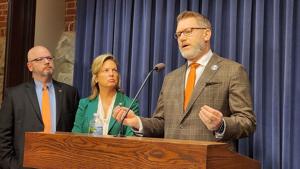
According to Rep. Daniel Didech, D-Buffalo Grove, who is carrying the bill in the House, said the bill is nearly the same as measures passed in New York and California.
Illinois-based regulations have previously been criticized, with detractors saying they would contribute to a patchwork of laws that could stifle innovation.
Didech said the measure specifically requires the biggest AI companies to create and publish protocols on how their organizations will prevent and manage harm as a result of their products.
“All frontier developers must report critical safety incidents to [Illinois Emergency Management Agency] and the Attorney General within 72 hours of them occurring. And if an incident poses an imminent risk of death or serious physical injury, they must also report to an appropriate law enforcement or public safety agency,” Didech said
The lawmaker also said the bill includes measures to protect whistleblowers in the event an employee seeks to come forward with safety concerns.
Jeremy Kudon, the director of American Innovators Network, said while the Illinois proposal is similar to the other states, the inclusion of an additional provision requiring third-party audits is nowhere to be seen in other states.
“There is no company in the United States that’s actually accredited or credentialed to audit AI generative models or frontier models,” Kudon said.
Scott Weiser from Secure A.I. Project said that there are ways to audit the companies, and Didech said that the fact a number of the companies in support shows they’re able and willing to work under this proposal.
“There are a number of organizations that do the work which would be involved in auditing and verification,” Weiser said. “There’s two categories. One is boutique specialist firms where all they do is work on AI verification and evaluation. The other is the traditional auditors, your Deloittes and KPMGs.”
Kudon further said he thinks the bill lacks clarity as to what an audit will be based on, and he said he worries there could be negative impacts for open-source models.
“True innovation is to take that open source model and go from there and say ‘OK what can I do to make this even more effective?’ or make certain tweaks that will be modeled towards the legal industry or the medical industry. That’s going to potentially go away,” Kudon said.
OpenAI, which operates the generative AI chatbot ChatGPT, supports the measure, as do some of their biggest competitors, such as Anthropic, which operates their own chatbot Claude.
“As AI systems become more powerful, clear rules around safety, transparency, incident reporting, and accountability are increasingly important. We believe the U.S. should ultimately have national standards for frontier AI safety, but in the absence of federal action, state efforts like this one in Illinois – alongside legislation already in place in California and New York – are helping to create a de facto nationwide approach,” Ann O’Leary, OpenAI vice president of global policy said in a statement.
A number of other initiatives to regulate AI are teed-up to move in coming days, and Illinois has the potential to lead the nation on regulation of the technology, working with many industry leaders.






Partly Sunny
Latest News Stories
Bills would end income tax on military’s pay and retirement

Mosley: Report arrives at a turning point in gender ‘medical scandal’

Republican majority in U.S. House wobbles with MTG resignation

Report: Michigan wasted millions on deceased Medicaid enrollees

Another cause of Thanksgiving/Black Friday stress? Lawsuits
State law helps Cook County expand immigrant legal defense fund

Illinois quick hits: Trump reacts to Chicago violence; Pritzker increases weight limit for certain vehicles

WATCH: Chicago violence and no cash bail; Governor candidate Dabrowski profile
Manhattan Greenlights 41-Lot Butternut Ridge South, Advances Wastewater Plant Expansion

New Lenox to Host Large Pollinator-Friendly Solar Farm

JJC Receives Clean Audit, Reports $21.6 Million Increase in Net Position

Everyday Economics: Rear-view jobs strength, forward-looking weakness in week ahead