Illinois slaps limits on non-lawyer investor power in law firms
Illinois has become the latest state to restrict the involvement of private equity and other non-lawyer interests in owning or running law firms, enacting legislation supporters say will help to protect the attorney-client relationship and wall off attorney fees from non-lawyers.
In the closing hours of the spring legislative session, Illinois lawmakers approved the legislation known as House Bill 5487.
In an unusual political alignment, the measure drew support from both the Illinois Trial Lawyers Association, which speaks for the state’s influential lawsuit filers, as well as from the group that normally lines up opposite them in court and on political issues, the Illinois Defense Counsel.
Both groups filed so-called witness slips before the Illinois General Assembly in support of HB 5487.
The measure is not yet law, as it must be signed by Gov. JB Pritzker.
Observers, however, say they expect HB5487 will win an easy endorsement from Pritzker.
The legislation explicitly places limits on the creation and use of so-called alternative business structures (ABS) and management services organizations (MSOs) in law firms.
The legislation defines ABS as a business arrangement which allows non-lawyers to own and lead law firms, and MSOs as an arrangement that gives non-lawyers and outside investors ownership interests in a law firm in exchange for providing certain business services to the firm.
HB 5487 doesn’t explicitly forbid law firms from working with MSOs.
But the legislation prohibits non-lawyers and outside investors from interfering in the “professional judgment of attorneys in representing clients; and
From “owning, or determining” or “revealing” client records and “attorney-client communications; and
From hiring or firing attorneys at the firm with which they may have a professional arrangement; and
Charging “any fee to the attorney or law firm that is directly, or indirectly based on the attorneys’ fees, revenues, or profits…”
The measure also would require law firms to disclose to clients if they have an MSO or ABS arrangement that may be still be allowed under state law.
The use of MSOs and ABS have become hot topics in the legal community in recent years.
Business groups, like the U.S. Chamber of Commerce, for instance, have warned such arrangements would only deepen the involvement of investors in pushing and controlling lawsuits targeted at American companies.
For decades, an ever-growing investment industry have used so-called third party litigation funding to financially back lawsuits in pursuit of potential windfall profits from the funds paid by defendants to settle the lawsuits or under jury verdicts or other judgments.
Business groups and legal reform advocates have warned such outside financing not only warps the legal system, but also threatens the U.S. economy and national security.
So, these groups see the rise of legal services providers operating under ABS to be a new version of that threat, enabling even more direct involvement from private equity and venture capital seeking in the civil justice system.
On the other side, trial lawyers groups have also begun to oppose the use of ABS and MSOs, seeing them as an attempt by private investors to redefine the attorney-client relationship, wrest control of the lawsuit industry and grab a share of attorney fees, as well as the judgments.
As Illinois lawmakers moved this spring to take action, they followed in the path laid by other states, including California and Colorado. Those states passed legislation to address the rise of ABS arrangements in Arizona, which had brought private investment to bear on personal injury cases and other civil actions.
The Arizona ABS system has come under criticism for lack of oversight and financial conflicts of interest, among other critiques.
That system had notably allowed at least one prominent California mass tort firm, Wisner Baum, to spin off some of its business to the ABS known as Eleos Law in Arizona. According to reports, Eleos is 46% owned by non-lawyers and is funded, in part, through 5% of Wisner Baum’s attorney fees.
Eleos reportedly has helped to manage 9,400 lawsuits over alleged injuries caused by the heartburn medication Zantac and 8,450 lawsuits over alleged contamination of baby food.
Such instances helped to spur the legislation in Illinois, as well.
The Illinois Trial Lawyers Association did not issue public statements declaring their support for the legislation or explaining their reasons for registering support for the measure at the General Assembly this spring.
However, the legislation drew the support from some of ITLA’s most prominent legislative allies, including State Rep. Jay Hoffman, D-Swansea, and from Illinois House Speaker Emanuel “Chris” Welch.
On the Illinois Defense Counsel side, attorney Dan Cotter, of the firm of Aronberg Goldgehn, of Chicago, said the IDC and ITLA together backed the measure because of its “foundational” nature to “the legal profession.”
Cotter and his colleague, Daniel Patrick Eckler, each entered witness slips before the General Assembly in support of HB 5487. Eckler declined comment, directing questions to Cotter.
Cotter said all sides agreed on the “broader issue of maintaining traditional roles” within the legal system and maintaining “public confidence in the legal system,” by requiring some level of transparency surrounding firm ownership and investor relationships.
Cotter said it was particularly important to address possible ABS-style fee sharing arrangements and to limit non-lawyer control over litigation and limit non-lawyer investor interference in the attorney-client relationship.
Cotter said the lines drawn in the new legislation notably still allow for the involvement of non-lawyer capital investors in the legal business, as long as they don’t interfere with the lawyers’ “professional judgment” in handling cases or law firm business decisions.
“But they can still do a lot of things they are doing,” Cotter said.






Sunny
Latest News Stories

Meeting Summary and Briefs: Manhattan Fire Protection District Board of Trustees for June 16, 2025

Fire District Eyes Partnership with Villages for Enhanced Safety Inspections

Manhattan Fire District Plans Major Staff Expansion, Promotions in Early 2026
Manhattan Secures Irish Fest for Four More Years with Financial Support
Crete Township Wins Approval for New Digital Sign at Community Center
Manhattan to Begin Paying Emergency Management Volunteers in ‘Long Overdue’ Move
Will County Planners OK Oversized Garage Near Naperville, Overriding Staff Recommendation
Manhattan Approves 14 New Homes, Bike Path Completion in Whitefeather Subdivision
Green Garden Landscaping Business Gains Permit Amid Strong Neighbor Support
Meeting Briefs: Will County Planning and Zoning Commission for July 15, 2025
Meeting Briefs: Manhattan Village Board for July 15, 2025
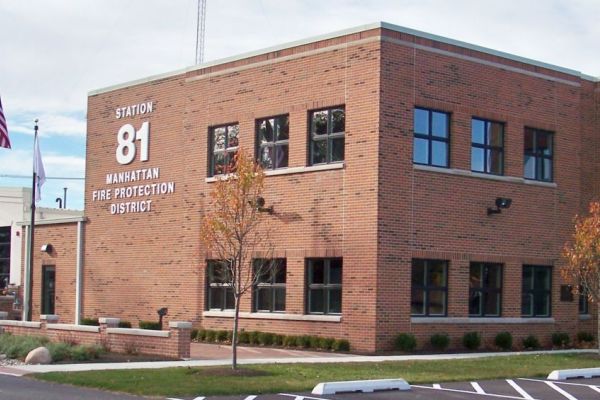
Manhattan Fire District Re-evaluating New Station Plans After Bids Come in Over Budget