Flooding, weather events impact farmers, taxpayers
(The Center Square) – Federal and state government agencies have announced assistance plans for farmers impacted by severe weather and flooding, but some producers may not want help.
The U.S. Department of Agriculture said on June 26 that agricultural operations in Illinois have been significantly impacted by severe weather and tornadoes.
The agency said technical and financial assistance is available to help farmers recover.
“Crop insurance and other USDA risk management options are offered to help producers manage risk, because we never know what nature has in store for the future,” said Mitchell Zipprich, Director of USDA’s Risk Management Agency Regional Office that covers Illinois.
On Thursday, state officials announced disaster tax relief in 11 counties covered by Gov. J.B. Pritzker’s recent disaster proclamation.
Taxpayers in the impacted counties may request a waiver of penalties and interest if severe weather prevents them from filing tax returns or making payments on time.
Dave Stark is president of agriculture at Holganix, a regenerative agriculture company.
Stark said many farmers don’t want government money.
“They would rather do it on their own. But farming is, as you just said, you never know. Is there a normal year anymore? What’s normal? And that’s been true my whole 43-year career in agriculture. That’s always been a wild card, the weather,” Stark told The Center Square.
Dan Meyer planted his 40th crop this year near Tuscola in Douglas County.
“We’ve had to change. We had places in our fields for both corn and soybeans that flooded out, where the water just stood for so long that, eventually, the crops drowned out,” Meyer told The Center Square.
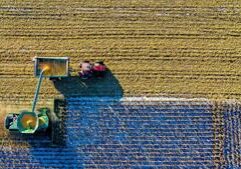
Meyer said his son planted about 100 acres of soybeans in April but didn’t get back into the field for almost a month because of rain.
Then, after crops were planted in May, parts of Illinois had record rainfall in June.
“On Friday, July 3rd, I went back out and planted five flooded-out areas once more with an old tractor and small planter of soybeans. It’s really too late to try and plant any corn now,” Meyer said.
Meyer said he could still have a decent crop if the weather is agreeable in July and August.
“But if we would hit a drought period or something like that, it could be pretty tough on the overall yields,” Meyer said.
Stark said Illinois is blessed with some of the best corn ground on Earth, but corn is more susceptible than soybeans to weather and erosion.




Sunny
Latest News Stories

Gori firm accused of fraud, racketeering, ‘bounties’ in asbestos litigation

WATCH: Democratic legislators introduce anti-ICE legislation

Illinois Quick Hits: Grayson gets 20 years for murder

Bill Cassidy, facing Trump-backed challenger, bets on ‘who delivers’

Trump Cabinet meeting: New Fed chair, coal saving lives, Russia and Ukraine

Paul introduces legislation to halt welfare funding for non-citizens
Food companies push back on Pennsylvania bills to ban certain food products

Pritzker, Johnson express concerns about 2028 DNC with Trump in office

Pritzker looks for rules for federal school choice scholarship program

Ex-deputy sentenced to 20 years in prison for killing Sonya Massey
Chicago homelessness on rise; advocates push for change

Will County P&Z Approves Mokena Scrap Drop-Off Despite Municipal Objections